


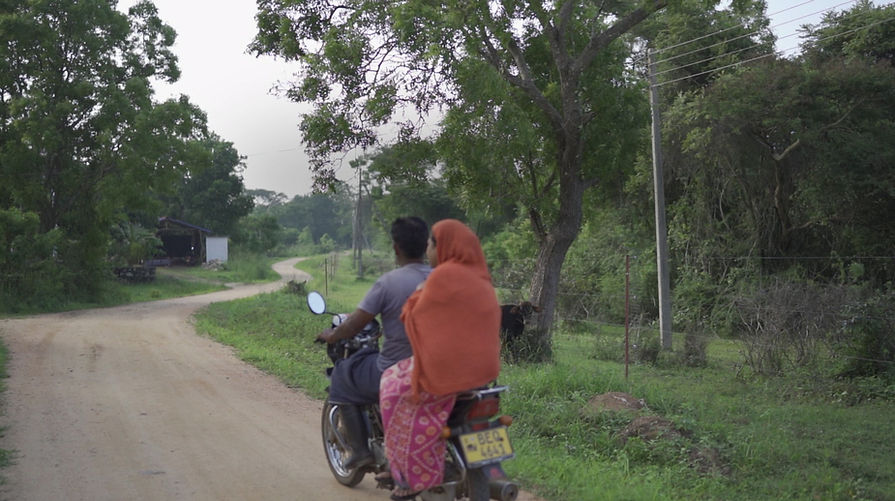
The National Action Plan for Human-Elephant Conflict Mitigation
Protecting Lives, Livelihoods, and Elephants

Sri Lanka is home to one of the last strongholds of the Asian elephant. Yet it is also a global hotspot for human-elephant conflict (HEC). Over half of Sri Lanka now experiences conflict between people and elephants, with hundreds of lives lost and communities affected each year.
The National Action Plan for Human–Elephant Conflict Mitigation, developed in 2020 by a Presidential Committee convened from leading scientists, senior administrators, and other officers from all relevant government agencies, offers a practical and science-based strategy to prevent further loss of life. Built on decades of research and community experience, the plan focuses on protecting people first, while ensuring that elephants, an iconic part of Sri Lanka’s identity, can survive into the future.
This National Action Plan is a commitment to protecting lives, livelihoods, and coexistence.
Human-elephant conflict is now reported across more than half the country. Farmers lose crops, homes, and financial security. Elephants are injured, displaced, or killed. The human and emotional cost is immense.


Why the old approach failed
For over 66 years, Sri Lanka tried to solve HEC by forcing elephants into protected areas using:
Mass elephant drives
Fencing along park boundaries
Translocation of “problem elephants”
First introduced in 1959, these methods were based on mistaken beliefs about elephant behaviour and habitat use, and have failed.
Key facts
70% of the elephant range is outside protected areas, where there are also farming communities. This is their natural habitat.
As farming expands in elephant range, they encounter crops and people more frequently, resulting in conflict.
Elephants have large home ranges and strong site loyalty (a deep attachment to their land), making it extremely difficult to remove them from these areas. Even if they are driven off or translocated, they always return, perpetuating conflict.
Protecting crops by aggressively confronting elephants and driving them away provokes them to also respond aggressively, escalating the conflict.
Driving elephants into protected areas and fencing them inside results in starvation and high mortality.
Elephant drives create highly stressed, aggressive animals, worsening long-term conflict.


These old and unscientific methods of driving elephants into parks do not work. They cost billions and claim both human and elephant lives, while the conflict continues to rise.
The National Action Plan for Human-Elephant Conflict Mitigation recognizes that Sri Lanka needs a new practical and science-based strategy.
The National Action Plan replaces the old, failed approach of trying to remove and confine elephants, to helping people and elephants coexist safely.
Key principles of the new approach
Protect people where the conflict happens
Instead of trying to fence elephants in protective areas, a national fencing strategy will now protect villages, farms, and homes directly.
Use science to guide decisions
GPS tracking, surveys, and long-term monitoring ensure that policies are based on actual elephant behaviour and that effectiveness of management actions are assessed and adjusted accordingly.
Empower communities to take part in mitigation
Villagers and farmers are empowered to protect their crops and lives.
Reduce harm to elephants
Ending outdated and unscientific methods prevents unnecessary suffering and preserves Sri Lanka’s wildlife heritage and tourism economy.


SHORT TERM ACTIONS
Immediate Protection for Communities
These measures provide immediate and visible results through practical actions that directly protect people and crops, especially in the highest-risk areas.
Community-Based Electric Fences
These fences form the backbone of the National Action Plan because they are proven to work.


How they help
They prevent elephants from entering villages or home gardens
They protect home garden crops, stored paddy, and household assets
They save families from losing months of income overnight
They eliminate the need to confront and attack elephants, risking life and limb
They enable families to have a restful night’s sleep without fear.
Why they succeed
Fences are installed around villages
Villagers install, maintain, and monitor them, ensuring ownership and accountability
They use proven designs and transfer technology to people so that communities can maintain them easily
Communities in Kurunegala, Hambantota, Trincomalee, and Anuradhapura have successfully operated community fences for over 15 years with proven reductions in elephant incursions into villages
Paddy-Field Electric Fences (Seasonal Fencing)
These fences protect crops only during the cultivation season when protection is actually needed, and do not require maintenance when fields lie fallow.
How they help
Farmers can cultivate their fields without the constant threat of sudden losses
Because the fence is only installed during cultivation, elephants do not have time to learn its weak points or how to breach it
Existing farmer societies already have the structure needed for both construction and maintenance
Reduces need for crop guarding and eliminates the need to confront and attack elephants, risking life and limb
Why they matter
Paddy crops represent a family’s entire yearly income, and a single elephant intrusion can ruin the whole harvest. Seasonal fences provide timely and targeted protection.
Relocating Ineffective Fences
Thousands of kilometres of government fences have been erected along the borders of areas without resident communities. Since 70% of elephant range lies outside these boundaries, these fences now run through habitat and separate elephants on both sides. Therefore, they cannot mitigate the conflict that happens on the side with people and elephants. Their construction and maintenance imposes a large expenditure of public funds without meaningful results.
The National Action Plan resolves this problem by
Surveying and producing a national map of all existing fences
Identifying fence lines that have elephants on both sides
Relocate fences where possible so elephants remain on only one side
Impact
Improves safety for villages
Eliminates unnecessary expenditure of public funds
Discontinuing Harmful Practices
Several outdated and unscientific practices are now proven harmful to people and elephants.
Large-scale elephant drives
Evidence shows they have consistently failed everywhere they were tried. Elephant drives create highly aggressive elephants and result in starvation inside parks.
Translocation (the practice of relocating an elephant from a conflict area to a different site, usually a protected area)
When elephants are moved, they return to their home ranges, sometimes travelling more than 100 km and increasing conflict as they cross new territory or establish themselves in new locations, causing new conflict.
Ending these practices prevents human-elephant conflict from worsening.
Reducing Human Deaths and Injuries
Awareness and safety training
Simple practices such as avoiding night-time walking and storing food safely save lives.
Safer rural roads
Clearing foliage on both sides of the road improves visibility
Adding street lights reduces night-time encounters with elephants
Compensation and insurance
Families affected by HEC to receive government support. Insurance for crop damage and injuries offers additional financial protection.
These measures offer immediate relief, reduce fear, and build confidence in the process.

MEDIUM TERM ACTIONS
Building the Tools for Sustainable Coexistence
These actions strengthen the scientific and institutional systems needed to sustain
long-term progress.
Mapping and Monitoring Elephant Populations
The National Action Plan will
Conduct island-wide surveys of elephant range
Use GPS collars to monitor elephant movement throughout the year
Assess reliability of elephant census methods
Why this matters
Accurate data helps
Identify areas with the highest conflict risk
Plan and place fences in the right locations
Guide development projects to avoid future conflict
Maintain key elephant corridors that protect the routes elephants rely on to move safely
Improving Electric Fence Design
Even successful tools can be improved. The plan includes:
Testing new and improved materials and fence layouts
Building and evaluating prototype fences
Improved solar-powered systems
Identifying cost-effective and durable designs
This ensures the country invests in solutions that offer strong performance year after year.
Developing New Mitigation Tools
The National Action Plan encourages practical innovation. Possible tools include:
Test trenches
Natural barriers
Improved solar-powered systems
Smart alarm systems
Community-based early warning networks
Pilot testing ensures that only practical, affordable, and sustainable methods are scaled up.
Integrating HEC Prevention into Development Planning
All development projects in areas with elephants, from roads to irrigation to plantations and farms, must consider their impact on elephants and HEC and incorporate necessary actions in their plans to prevent and mitigate conflict. This prevents new conflict hotspots from emerging and ensures development remains environmentally responsible.
Managing Chena Cultivation
Chena lands are shared seasonally: farmers use them during the wet season, and elephants rely on them during the dry months.
The National Action Plan introduces
Mapping areas where cultivation is allowed
Granting annual permits for chena cultivation
Guidelines to prevent ad hoc conversion of chena lands to permanent settlements and cultivations, leading to HEC escalation
This keeps the “time-share” system intact and reduces unnecessary conflict.

LONG TERM VISION
A Science-Based National Elephant Master Plan
The long-term goal is to establish a comprehensive, data-driven elephant management plan that
Protects viable elephant populations
Supports communities living alongside elephants
Ensures sustainable land use
Builds coexistence into future development planning
This is a generational investment that safeguards both our rural families and our wildlife.
Strong Oversight and Accountability
A Presidential Task Force will oversee progress, coordinate agencies, and ensure that all actions are implemented effectively.
Annual reviews allow the plan to evolve based on
New data
Changing landscapes
Lessons learned
Community feedback
This keeps the Action Plan “alive” and adaptive to Sri Lanka’s needs.
What Success Will Look Like
Within a few years of full implementation, Sri Lanka can expect
For Communities
Reduced risk to people
Significant reductions in crop and property losses
Increased community participation and ownership
Safer travel along rural paths and roads
Better economic stability for households
For Elephants
Reduced deaths and injuries
Improved health and survival
Safer movement in shared land
Reduced stress and aggression
For the Nation
Improved harmony between conservation and development
Expansion of wildlife tourism
Recognition as a world leader in coexistence
How You Can Help
Every citizen can contribute to reducing human-elephant conflict by
advocating for the National Action Plan.
Coexistence is a collective responsibility.
Together, we can protect ourselves, our farmers, our elephants, and our shared home.